All posts by pibinko

SA.MU.R.A.I. Musical Residency in Tuscany – Open Call (deadline: Feb. 24).

This is a call for a 300-hour music residency in the heart of Tuscany, half way between Pisa and Volterra, with lessons starting in mid March and ending in December (pausing during the summer months) with a final event in Florence. The tutors are very high-level music professionals from the Italian musical scene.

The call is open also to non-Italian citizens, provided that they are residing in Tuscany and have a knowledge of Italian sufficient to interact with others, so: here you have a full presentation in Italian to start with:

Toscana Produzione Musica e Salty Music APS, riunite in SA.MU.R.A.I. RMT ATS, presentano la Residenza Musicale Toscana SA.MU.R.A.I., nata per selezionare e far crescere nuovi talenti.

Un progetto gratuito rivolto a giovani musicisti, cantanti e cantautori residenti o domiciliati in Toscana, tra i 18 e i 35 anni, in possesso di diploma di istruzione secondaria di secondo grado, disoccupati, inoccupati, inattivi e occupati che intendano avviare un’attività nel settore musicale.

Il percorso formativo, coordinato da Matteo Zanobini (manager musicale e fondatore di Picicca Management), unisce lezioni teoriche e attività pratiche, con un focus sull’applicazione: musica d’insieme, produzione artistica, sperimentazione e co-creazione.

Da marzo a dicembre il percorso prevede 50 giornate di attività formative, per un totale di 300 ore, seguite da docenti di primo piano, in sei aree formative: Artistica interpretativa, Musica d’insieme, Tecnica e produzione, Management e discografia, Comunicazione e promozione e Aspetti legali, amministrativi eorganizzativi. A queste si affianca il Fuori Residenza, composto da dieci giornate di attività trasversali, tra
cui un incontro con Dario Brunori, visite didattiche ai tour di Brunori SAS e Lucio Corsi, oltre a una fase di post-residenza. Il percorso si concluderà a dicembre con un evento finale aperto al pubblico, un concerto presso il PARC di Firenze.

Le attività formative si svolgeranno prevalentemente presso la Tenuta di Camugliano, tra i comuni di Ponsacco e Capannoli (PI), dove i partecipanti conviveranno insieme in un contesto naturale che favorirà la concentrazione e la creatività.

Sono aperte le selezioni online: le domande di iscrizione potranno essere presentate fino alle ore 12:00 del 24 febbraio 2026, attraverso il sito samurai-rmt.it. Il percorso è gratuito ed è prevista una borsa di residenza pari a 25 euro al giorno, per un totale di 1.250 euro per l’intero periodo.

I candidati selezionati saranno invitati a una selezione in presenza presso l’ExWide di Pisa nei giorni 4 e 5 marzo 2026.

Al termine di questa seconda fase, saranno individuati i 15 partecipanti, motivati a intraprendere il percorso, scelti, sulla base di capacità tecnicche, creatività, originalità e presenza scenica, da una giuria composta da Andrea Fornai – coordinatore artistico Salty Music APS, Salvatore Barbato – direttore artistico The Cage Theatre, Marina Mulopulos – vocal coach, cantante, Matteo Zanobini – esperto di management e discografia, Rossella Falco – esperta comunicazione e promozione, Daniela Di Tommaso – rappresentante ATS Samurai RMT, Francesco Mariotti – Rappresentante ATS Samurai RMT.

SA.MU.R.A.I. è finanziato dalla Regione Toscana nell’ambito del PR FSE+ Toscana 2021–2027 e rientra tra le Residenze Artistiche Musicali sostenute da Giovanisì, il progetto della Regione Toscana per l’autonomia dei giovani.

Per ulteriori informazioni visitare il sito samurai-rmt.it o scrivere a info@samurai-rmt.it.

BuioMetria Partecipativa 2026: Who goes first?

With January’s waning moon here we go with the next BuioMetria Partecipativa (participatory night sky monitoring), campaign, turning 18 on June 9.

With the coming of age of our project we will be conducting, together with those who want to join, measurements of night sky quality with the “buiometro” (dark-sky meter), and other observations to better understand how light pollution works, how it can be reduced (without worsening our lifestyle), and how to use light in a more aware way.

The activities for this year are part of the course on Nightscapes and dayscapes (link in Italian) by uni*rural*. This is the non-formal education program by the pibinko.org network, in collaboration with various partners. Active participants will be receiving educational credits which in some cases may be “spent” with your education institutions.

To start building our new team in the past months we have already contacted some wannabee “buiometristas”, especially in the southwestern quadrant of Tuscany (Pisa, Leghron, Grosseto). Then as you know, with the pibinko.org network we are open to contacts from any land, so please contact segreteria@unirural.org or +393317539228 if you are interested.

For all the BMP “files”: https://www.pibinko.org/buiometria-partecipativa-2/ …but please see below for an educated summary.

A little bit of history

In February 2008, over a phone call between two environmental engineers about options for an amateur astronomer holiday in Southern Tuscany with a territorial marketing plan based on lesser-know aspects of the same region, the BuioMetria Partecipativa (or BMP) project was conceived.

At the time the project was the second globally (and the first in the western hemisphere) to propose lending to citizens sensors to conduct night sky quality measurements. Without initial external funding (and, in fact, never with a lot of external funding), the project initially had a significant media impact in Italy (RAI Radio 2, TG2 Costume e Società, Mickey Mouse magazine with a “Speciale Cacciatori di Buio” ecc.) and started to develop collaborations with numerous sectors of society (see this summary from 2017)

In the winter of 2010-2011 BMP promoted the creation of the first national coordination for the collection of light pollution data from fixed monitoring stations. This happened in collaboration with Veneto Stellato, Università di Roma Tre and various amateur astronomer associations. Namely, the BMP team, after launching the idea, took care of writing the code to handl the data harvesting from stations which were using different communications protocols, the aggregation of all monitoring data in a web database, and an online query/reporting interface. The system was active between 2011 and 2019 and in its peak phase was providing data from ten stations from different Italian regions.

The European dimension

Between 2013 and 2016 BMP also had a liaison role between Italian actors and European research on light pollution issues. Andrea Giacomelli was appointed as the primary point of contact for Italy in the “Loss of the Night” project in the COST research exchange program. In the same period formal collaborations were started with the University of Pisa and the National Research Council’s Institute of Biometeorology (now Bioeconomy) in Florence. Between 2016 and 2018 BMP also had collaborations with the Stars4all HORIZON project.

Awards and recognitions, in Italy and abroad

The first award recived by the BMP project was in 2009. This was for a national contest called “La Seconda Luna”, and BMP came in fourth out of 120 applicants, curiously with a prize for a category which did not exist in the contest rules. In 2015 the project was invitated for a presentation at the Eye on Earth conference in Abu Dhabi (where it turned out to be the only Italian project out of over 600 participants). In 2019 Andrea Giacomelli was awarded the title of “dark sky defender” by the International Dark Sky Association, for the dissemination and awareness work done in the previous ten years.

Apart from “serious” recognitions, BMP also had an impact which we may define “emotional”. For example, in 2020 a book of short stories about darkness “Il Buio” (Erasmo Libri) had a story inspired by the BMP project (and the story actually won a literature award).

BMP, regulations, and policy

BMP in time also had an active role in governance support (maybe this is not by accident, since one of the two founding engineers has also been part of the drafting team for a European Directive). In 2012 BMP sent eight comments to the revision of the Piano Ambientale ed Energetico della Regione Toscana (the Tuscan master plan on environment and energy). Five of these observations, including the one which led to declaring the night sky as a tourism resource, were accepted. Furthermore, the BMP experts have periodically been invited to provide advice on lighting and energy efficiency issues on various administration levels.

In 2018-19, following the “Capraia Night Sky” symposium (co-organizzato with UNIPI and CNR IBIMET), BMP proposed once again the idea of a coordinating body across various subjects involved in outreach, administration, and research. This did not go forward, but it would not be complicated to reboot the process.

Since 2020

The 2020 pandemic gave a severe blow to participatory activities: it would have been very difficult to run a project involving hand-to-hand instrument logistics. However, the core of the BMP engine was adapted to operate in strict lockdown mode, with the Participatory Lithology project, which also led Andrea Giacomelli to be invited to be an alumnus of the Robert Bosch Foundation.

In the past five years the BMP project has essentially operated as an “on-call” project, however our effort in weaving connections across subjects who ofter operate independently (but live, in any case, under the same sky) has not stopped. In particular, we have consolidated the use of music, in addition to photography, as a means to facilitate the dialogue among different parties, and always using maps as a minimum common denominator for analysis and communication. We also got to observe the Milky Way by day, as shown in the video below!

Educational credits

Over all this time, BMP also had a practical role in the educational field. We have covered primary, secondary, and high schools, universities (including lectures and tutoring for ERASMUS students), and professional charter organizations (architects, engineers, environmental guides). To learn more on how to acquire educational credit with the BMP project: segreteria@unirural.org or +393317539228

Countries from which pibinko.org Network stories have been followed in 2025

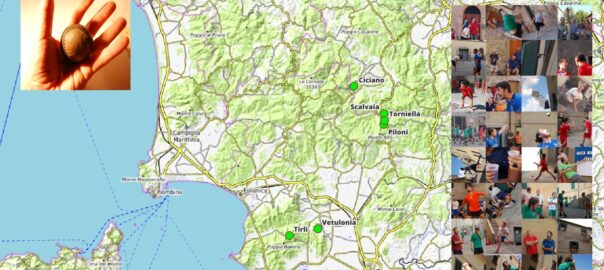
After publishing our “year in review” article (see link), in preparation for our upcoming initiatives we are giving you a few more statistics on our web presence. Here you can see as a list (or in the header image as a map) an overview of the countries from which somebody have seen at least once of our blog posts over the past twelve months, in alphabetical order:

Afghanistan,Albania,Algeria,Andorra,Argentina,Australia,Austria,Bangladesh,Barbados,Belgium,Belize,Bolivia,Bosnia and Herzegovina,Brazil,Bulgaria,Canada,China,Colombia,Croatia,Cyprus,Czechia,Denmark,
Egypt,Estonia,Finland,France,Georgia,Germany,Ghana,Greece,Guatemala,Hong Kong,
Hungary,Iceland,India,Indonesia,Iran,Ireland,Israel,Italy,Ivory Coast,Japan,Jordan,
Kenya,Kosovo,Liechtenstein,Lithuania,Luxembourg,Madagascar,Malaysia,Malta,Mexico,Moldova,Montenegro,Morocco,Nepal,New Zealand,Nigeria,North Macedonia,Norway,Pakistan,
Philippines,Poland,Portugal,Puerto Rico,Qatar,Romania,Russia,Saudi Arabia,Senegal,
Serbia,Singapore,Slovakia,Slovenia,South Africa,South Korea,South Sudan,Spain,Sweden,Switzerland,Taiwan,Thailand,The Netherlands,Tunisia,Turkey,Uganda,
Ukraine,United Arab Emirates,United Kingdom,United States,Vietnam

If we extend the analysis to all of our logs (which start from 2019, even though the web site is on since 2006), to date in the world there are only a dozen countries from which our stories have not been seen.

Reducing New English Translations for Material in the pibinko.org Network (and related projects)

Since the very first online moments of the pibinko.org network (the first web page written by pibinko is dated 1994, and the first site un pibinko activities was launched in 2006) we have proudly maintained our contents at leat in Italian and English (please note that on our sites we have around 6000 articles.

Summing these contents with those on jugbandcm.it (since 2019) and the very recent unirural.org and mappare.org, there is quite a bit of stuff: in practice around one million words** (to which you should add images, audio recordings, video, etc.). All of this material is produced without generative AI, and sometimes with interesting localization and transcreation exercises (e.g. https://www.pibinko.org/sharing-the-perception-of-credibility-in-participatory-investigation/ versus https://www.pibinko.org/condividere-la-percezione-della-credibilita-nelle-indagini-partecipative/, or the “Rosetta Stone” transcript for the concert/interview by the Jug Band Colline Metallifere on Radio Deejay Fox in 2021: https://www.pibinko.org/the-rosetta-stone-style-transcript-of-the-live-motel-show-dec-17-2021/).

For our first tour in Germany with the JBCM we actually started a line of articles in German, with Wolfgang Scheibe providing the translations in addition to hand-made prints and one-string basslines. After the months we looked each other in the eye and said “Really?“.

Translating has never been a technical issue (pibinko also works as a translator and reviewer for international companies). However, with the launch of the uni*rural* (and after publishing a couple of months ago an announcement for translators) we start with the following line, considering the significant amount of material we expect to write:

  1. We will be stopping the creation of the English versions of our articles (unless this is required by a customer or has a specific value for the network).
  2. If you have issues reading our material in Italian, feel free to try your favourite translator (just reminding that, with the online ones there is a history of mistakes made on pibinko text))…
  3. If, at any moment, your favourite translator will not suffice, we are available to provide clarifications and further information.

Otherwise, we will end up spending more time translating than doing the things we write about! Thank you for your understanding, and good luck with the improvement of your Italian on the pibinko.org sites! We will be re-assessing the case at the end of May 2026.

To support pibinko.org activities: https://www.pibinko.org/sostieni

micalosapevo@pibinko.org or +393317539228

sigla:

(**) Per la precisione bisogna escludere testi di canzoni di cui abbiamo curato la traduzione et similia, che comunque sono una quota trascurabile del totale

2025 with the pibinko.org network: a year in review

Since 2006 with the pibinko.org network we deliver projects related to protection and promotion of lesser-known assets, places, and people. We work with a diverse range of stakeholders, mostly private or non-governmental organisations.

We propose an interdisciplinary and multi-cultural intertwining of situations. This is perceived as confusing by most people, intriguing by many, and useful by some. We can help “many and some” with services which take the shape of creation or management of events, promotion, training, support to import/export or logistic, live music, etc. This is detailed in https://www.pibinko.org/services/. If you are in a hurry, please note our 2026 starting keywords (rivers, samurai, books) and our contacts micalosapevo@pibinko.org or +393317539228.

If you have time for a cup of tea, below you will find a showreel of things we did in 2025…with some phrases, some pics, and some links to review all of our blog posts (for this year we have almost 450, summing up material from our sites pibinko.org, unirural.org, jugbandcm.it e mappare.org).

A note on translations: historically (since 2006), we have always maintained a parallel (Italian/English) version of all our web sites. In the past few months we have started to reduced the “to English” translation of our Italian content as a part of the uni*rural* cultural mediation approach. This means that when you are on the English version of our sites, you will tend to lose a lot of cool blog posts, videos etc. We encourage you to stay on the Italian version of our sites (unless we are collaborating on some international initiative). If you require more information on any Italian-content page, we will be happy to provide it (just write or call).

January: Taking it Easy

The “Low Pressure Rider” lyrics were written. Initially this was fitting in a “Riders of the Storm” by the Doors groove. Then Wolfgang said this was too slow, so it became more of a country-Johnny Cash kind of thing! A couple of gigs with the Jug Band Colline Metallifere. Relatively calm: https://www.pibinko.org/it/2025/01

February: Tattistampa ruleZ

https://www.pibinko.org/it/2025/02 – A lot of Tattistampa promotion (always using Simone Sandrucci’s JBCM title track), plus some promotion for other friends of the network. palla a 21/palla eh! tutorial in the Gavorrano (Southern Tuscany) secondary school. This was for an Erasmus project involving students from the Canary islands (in collaboration with friends from Vetulonia).

March: Tattistampa in the press, once again…

Once more we supported Tattistampa in his open day for the “Tag der Druck Kunst”. This was extensively featured in the local press (https://www.pibinko.org/tattistampa-tirreno-20250315/). More promotion for network “associates” in Tatti and Livorno. Final events for the “CIRCOLARE” project, where pibinko was hired in 2024 to provide mapping support and consulting. https://www.pibinko.org/it/2025/03

April: Come she will, with ball games and impromptu biographies

There was the second ball game tutorial in Gavorrano, spawning a TV interview (April 10, TV9), plus more palla-related meetings in Sassetta. “A piedi nel Far West, Itinerari enogastronomici maremmani” by Irene Pellegrini, a book on hiking and eating in Maremma (Southern Tuscany/Northern Latium) was published. The book actully contains pibinko’s biography in four pages (although he didn’t realise this was coming when he was interviewed in 2024 by the author): https://www.pibinko.org/a-piedi-nel-far-west-itinerari-enogastronomici-maremmani/

Overall: https://www.pibinko.org/it/2025/04/

May: Approaching warp speed

Between april 30 and May 1st creative and performative energies were split between Le Rose Selvatiche (the Tatti May singers) and the traditional May celebration in Torniella. The Jubel Tour was announced. “111 Luoghi delle Maremme che devi proprio scoprire” was published, containing more “slots” covering parts of the pibinko network components (Palla a 21, featuring a photo shot by pibinko, and Tattistampa). The first Maremma Cross-Border Hiking Festival was announced. This came from an idea by Irene Pellegrini and was promoted with the support of the pibinko.org network. We had a non-casual afternoon studio recording session in Sesto Fiorentino with the Jug Band Colline Metallifere. This was for a track with Dario Canal and his solo project (https://www.pibinko.org/pomeriggio-da-shed-626/). The production of a documentary featuring Wolfgang (whom in turn involved the Jug Band Colline Metallifere) begin. We also started the collaboration with Riccardo Franchini, a young anthropologist at the beginning of his PhD in Siena, triggered by his contact with ASBUC Tatti.

https://www.pibinko.org/it/2025/05

June: cross-border festivals, ball games, and German tours

https://www.pibinko.org/it/2025/06 – FTEM, Jubel Tour, S. Giovanni palla tournament in Sassetta (the first after decades)

July: mapping folks, promoting project results, and events in the Pisa area

https://www.pibinko.org/it/2025/07

August: Photo editing, updating our presentations, and place name studies

https://www.pibinko.org/it/2025/08

September: “…you know from the beginning that it would end like this”

https://www.pibinko.org/it/2025/09 – a lot of focus on the Jubelfest, but also some Farma Valley m(‘)appare with former colleagues. Random kittens. The idea for the fourth Farma Valley Winter Fest was launched (with an e-mail on Sep. 15)

October: smiling railways, and challenging olives.

https://www.pibinko.org/it/2025/10 – Having shared the idea, the preparation for FDIVDF4 starts rolling. This is in parallel with more research and projects (including olive harvesting), always with a soundtrack. The uni*rural* project is launched (https://www.unirural.org/en/project/).

November: almost all the leaves are brown, but the sky is not gray

https://www.pibinko.org/it/2025/11 – ….and, following https://www.unirural.org, also https://www.mappare.org, is launched. This is the site dedicated to m(‘)appare with the pibinko.org network.

December: “No Sleep Till Booking!”

https://www.pibinko.org/it/2025/12 – things keep flowing, at (at least) two latitudes. We start with m(‘)appare Tilane, while the GuidAgenda on which we worked in August and September is published. The Farma Valley Winter Fest will require a dedicated report, which will be available by mid January.

…and what about 2026?

Since September 2025 we are at work on a calendar of activities running through Sep. 2026. Unless weird or ugly things happen, it should be more or less like 2025, but with improvements (for all). Starting keywords are: rivers, samurai, books.

If you liked our 2025, and would like to be part of 2026 with the pibinko.org network, you may first of all support our activities (https://www.pibinko.org/support), and/or request one or more of our services (https://www.pibinko.org/services).

For more information: micalosapevo@pibinko.org or +393317539228.

Sigla:

What is the best Kanji “expression” for a “Music Samurai”?

In the pibinko.org network we like multi-cultural approaches, and trying to relate to different languages is step 1. For a start, we normally work in four-five languages (Italian, English, French, Portugues, and German rising in the past ten years). But this is not enough, and we keep challenging our team…e.g. over the past five years Albanian is trending for some of our projects.

To date, our flagship initiative in terms of multi-language production is the translation for “The Revenge of the Killer Chihuahua and of the Zombies” short movie back in 2006-2007. The movie is in Italian, and has English subtitles in the DVD. We then managed to get the German translation (but did not make it to add it to the subtitles). However, we did manage to get the translation of the title in 29 versions, combining languages, dialects, and including very peculiar scripts such as Egyptian hyeroglyphs. This was all done without using internet resources or mailing lists. All by direct physical interactions.

For Japanese, our colleage Claudia Ceroni proposed:

So now you have a little context…and this is our next task:

We would like to find the best Kanji representation to express the concept of a “musical samurai”. A musician who sees music and art has his/her masters and serve them to the benefit of the land…kind of.. (for the persona we have in mind we don’t need to be too strict on the analogy to the mission of a samurai).

We did a little bit of non-AI-supported internet homework, and found the combination that we are showing in the header image, but we are not sure.

We are reaching out to Japanese folks to check if this could be ok, or if you could kindly suggest a more appropriate representation.

Please write to segreteria@unirural.org for any feedback. We will be glad to credit any productive response, and to compensate it with something typical from Tuscany (with the type of product to be defined depending on the country where you reside, as there are limitations to shipping food and beverage to certain locations).

p.s. An interesting, albeit a bit warped, case of the character we are developing is told in the Six-string Samurai movie. We have a DVD copy of this in the pibinko.org stuff-o-theque.

Are you between 14 and 35? Do you live in Paderno Dugnano (Milan) or surroundings? Come to M(‘)appare Tilane!

This is the next participatory mapping initiative with the pibinko & friends network…(our first ones started in 2008 with M(‘)appare Milano and the BuioMetria Partecipativa project about night sky quality monitoring. Please refer to https://www.pibinko.org/maps/ for some context about our work.

We will have six days in the Tilane library in Paderno Dugnano, just North of Milano. We are not translating the whole article into English…but if you are curious, please feel free to inquire: segreteria@unirural.org or +393317539228.

Il 28 novembre dalla biblioteca Tilane di Paderno Dugnano, a nord di Milano, partirà una campagna di mappatura partecipativa in cui gli utenti e i lettori diventeranno esploratori e ricercatori, arrivando a creare la prima versione di una sorta di guida escursionistica che comprenderà sia percorsi “fisici”, percorribili a piedi o in bicicletta, che percorsi immaginari, a partire da libri, riviste e altri articoli disponibili per il prestito o la consultazione.

Il risultato di questo esercizio di rilievo e scrittura collaborativa sarà un blog, in cui chi andrà a m(‘)appare riporterà impressioni e note di campo, e una mappa interattiva in cui saranno visionabili i percorsi e da cui sarà possibile scaricare tracce (non necessariamente tracce GPS) che consentiranno ad altri visitatori di ripercorrere le stesse esperienze, o di crearne di nuove a partire da quelle esistenti.

La peculiarità, rispetto ad altri prodotti turistici/escursionistici, è che i percorsi che troverete in M(‘)appare Tilane non solo sono passeggiate o visite guidate nella biblioteca (che già vengono proposte fra le attività culturali della struttura), ma possono rappresentare dei veri e propri “viaggi”, tra fantasia, esercizio fisico, fotografia, scrittura e altre arti e discipline, con la base comune di una mappa del territorio.

Chi può m(‘)appare Tilane?

m(‘)appare Tilane è per tutti. In particolare, la biblioteca è interessata a coinvolgere persone fra i 14 e i 35 anni. Se ne avete di meno potete farvi accompagnare dallo zio, e se ne avete di più potete portare la nipote, e più o meno dovrebbe tornare la fascia di età.

Il progetto è indirizzato soprattutto a chi risiede a Paderno o nelle vicinanze, ma non è proibito venire anche da altre località. Per esempio, potreste incontrare Jennifer, la renna psichedelica con una grande passione per la geografia

Jennifer, la renna psichedelica, è interessata a m(‘)appare Tilane.

Quando si va a m(‘)appare Tilane?

2025

  • Venerdì 19 dicembre, dalle 15 alle 19
  • Sabato 20 dicembre, dalle 15 alle 19

2026

  • Venerdì 16 gennaio, dalle 15 alle 19
  • Sabato 17 gennaio, dalle 15 alle 19
  • Venerdì 6 febbraio, dalle 15 alle 19
  • Sabato 7 febbraio, dalle 15 alle 19

Oltre ai ritrovi di persona in biblioteca, ci saranno poi modi per comunicare online, tra un appuntamento e l’altro.

Per partecipare: bisogna iscriversi

Il modulo di iscrizione per venire a m(‘)appare Tilane è alla pagina: https://www.tilane.it/tilaneforyouth/

Non sono necessarie particolari competenze informatiche o escursionistiche. L’importante è che siate persone curiose e aperte a collaborare in gruppi un po’ eterogenei. Il resto viene da sé.

Se avete uno smartphone, può essere utile anche se, e fa strano scriverlo nel 2025..non è necessario per m(‘)appare!

L’iscrizione è gratuita.

Il docente

Come docente per imparare a m(‘)appare Tilane, troverete l’ingegnere e dottore di ricerca Andrea Giacomelli, aliasi pibinko, con esperienza internazionale in oltre 30 anni di creazione di mappe e da quasi venti impegnato a m(‘)appare: https://www.mappare.org. L’ing. Giacomelli sarà coadiuvato da alcuni assistenti, che vi saranno presentati via via (se scorrete https://www.pibinko.org/notizie potete avere qualche anteprima).

Il corso fa parte della programmazione TilaneforYOUth, un progetto del Comune di Paderno Dugnano finanziato dal Dipartimento per le Politiche Giovanili e del Servizio Civile Universale attraverso il bando Giovani in Biblioteca.

4th Farma Valley Winter Fest (Southern Tuscany)- the Program in a (big) Nutshell

Please note that the detailed program is available at: https://www.unirural.org/fdivdf4-programma-info/ (in Italian). Before we delve into the details, please remember the main “Valley house rules”

  • move around and drink/eat responsibly
  • segreteria@unirural.org or +393317539228 (preferably via messaging) for information, meal and lodging options etc.
  • for those registering for the events, if interested: you will be eligible to obtain uni*rura* educational credits (see: https://www.unirural.org/en/project/)
  • participation to all activities is free (except for the meals on Saturday in Scalvaia and Torniella). In any case, if you like the festival, you may make a donation to the subjects who are organizing the festival (see: https://www.pibinko.org/20251205-sostieni-fdivdf4/, in Italian)

Tursday 11

pizza, quiet, curiosity

A pre-festival evening to break the ice between the organizers, some of the guests arriving from farther away, and anybody who wants to join.

Friday 12

active citizenship, knowledge sharing, aperitivi

This is the “technical” (but not academic) day of the festival. Attending will be in between being part of a science outreach show on the Geography Channel and a session of a participatory design initiative where local residents will be on the same level as international experts and early-stage researchers.

Because what counts is not just what the Farma Valley can do for you, but what you can do for the Farma Valley (and one hundred similar locations).

Saturday 13

Hiking, stalls, vynils

The weather should be ok (no rain is forecast), so the morning opens itself to opportunities for valley explorers (we recommend to check in at the Combriccola info point to verify which will be the active hunting areas during the day).

In the afternoon the FARMA VALLEY EXPO 2025, will be on, with various stalls and desks, and products from local farms and associations. This will lead us to the “apericena” (please book) and the enticing vynil DJ set by our Songmelier from Rome.

For those arriving to the Valley from the North, or for those interested in an alternative program for part of the afternoon, there is the possibility of drifting to the Siena side of the valley. Our friends in Scalvaia will be preparing a mouthwatering lunch, followed by guided tours at the Roberto Serragli carpentry micro-museum and to the Rita Ganozzi Civic Library. After this, we will be waiting for you all in Torniella for the evening part of the program).

Sunday 14

first come and see, and the tell us what three words you would use to summarize this day.

For the morning, hikers of the world, unite in the booking of the guided tour at the Belagaio National Reserve, organized by the Raggruppamento Carabinieri Biodiversità (segreteria@unirural.org or +393317539228, by Dec. 13). This will be the opportunity to explore a lesser not but beautiful natural reserve, the court of its castles, and the Casa Nova visitor centre, after several years in which these facilities have not been accessible.

After your favourite snack or meal, you may merrily direct your steps towards the historical building of the Associazione Filarmonica Popolare di Torniella to visit the pibinko.org network travelling micro-museum.

While you will be busy perusing books from the Seventies, trying to play with “palla 21” balls, listening to incredible anecdotes featuring notable actors from the Farma Valley and its surroundings (Il Papero, Pellegro, and other characters compared to which George Best was a choirboy), etc., the pibinko.org network agents will be setting up the stage to treat your ears and soul. First there will be a set with Lucio Dalla covers, with Dario Canal, Simone Sandrucci, Giacomo Biancalana, and Gianmarco Bonnìci. This set will be followed by a show by the kaleidoscopic Jug Band Colline Metallifere, featuring a couple of surprise guests.

By 9PM we plan to close shop: Dec. 15th is a Monday, and some of the participants will go to school, others to work, and others will be resting (suurely pibinko, who over the past ten weeks hase been working on 16-hour/day shifts between festival organization and other projects).

For more information, requests or proposals: segreteria@unirural.org or +393317539228.

Sigla:

Dici che i tuoi fiori | You say that your flowers
si sono rovinati | have waned
non hai abilità | you have non abilities
questa nazione è brutta | this nation is ugly
ti fa sentire asciutta | it makes you feel dry
senza volontà | with no will
e gioca a fare Dio | and plays God
manipolando il tuo DNA | manipulating your DNA
così se vuoi cambiare | so that if you want to change
invece resti uguale | you still remain the same
per l’eternità | for eternity

ma non c’è niente | but there is nothing
che sia per sempre | which can be forever
perciò se è da un po’ | so if it’s been a while
che stai così male | that you feel so bad
il tuo diploma in fallimento | you failure master
è una laurea per reagire | is a degree to react

puoi finger bene | you can be a good pretender
ma so che hai fame | but I know you are hungry

tutto è efficacia | all is effectiveness
e razionalità | and rationality
niente può stupire | nothing can amuse
e non è certo il tempo | and surely time is not
quello che ti invecchia | what makes you older
e ti fa morire | and eventually die
ma tu rifiuti di ascoltare | but you refuse to listen
ogni segnale che ti può cambiare | to any signal which may change you
perchè ti fa paura | because you are afraid
quello che succederà | of what will happen
se poi ti senti uguale | if you then feel the same

ma non c’è niente
che sia per sempre
perciò se è da un po’
che stai così male
il tuo diploma in fallimento
è una laurea per reagire

sai finger bene
ma so che hai fame

non è niente
non è per sempre
è troppo ormai
che stai così male
il tuo diploma in fallimento
è una laurea per reagire
non è niente
non è per sempre

pibinko speaks about the 1st Jug Film Fest for Colline Metallifere (and more 2026 outlook) – TV9 Telemaremma – Nov. 18, 2025

The whole show, with more interesting guests, is available at: https://www.tv9italia.it/2025/11/18/221-18-11-2025/.

This is a quick and dirty revision of an automated transcript. If you would like a proper translation, please write to micalosapevo@pibinko.org. FC is Francesca Ciardiello, PIB is pibinko

FC: Bene, riprendiamo dal palco la diretta di #221. Siamo in compagnia di Andrea Giacomelli, che è l’ideatore e l’organizzatore del Jug Film Festival, che in questo momento ha trovato, diciamo, la sua stabilità in giro un po’ per la Maremma. Intanto, come funziona, come arriva l’idea? La troviamo accompagnato da due personalità, se le vogliamo presentare. Innanzitutto,

PIB: buonasera e grazie per l’invito. Qui abbiamo, alla mia destra Mauro il Tirannosauro, che collabora con noi dal ’99. Mauro il Tirannosauro.

FC: E vi rappresenta, perché?

PIB: Sì, sì, no, partecipa alle alcune produzioni, canta, abbiamo fatto dei video con la Jug Band, con le colline metallifere. È un collaboratore a tutti gli effetti.

FC: Poi spiegheremo per coloro che non lo sapessero perché il nome del festival, cioè il festival, a chi e a cosa deve il suo nome.

PIB: Ce la faremo. E l’altro collega che abbiamo oggi non è solo, non sono i soli, ce ne sono altri due, oltre a quelli umani, è Jefferson. Jefferson è un emù, viene dall’Inghilterra. E ha un cugino brasiliano chiamato Guimares, che essendo brasiliano, visto che questo è punk per il viola inglese, l’altro invece ha il pelo, diciamo, abbastanza. Ah, ok, quindi insomma, c’è questa storia. Hanno iniziato a collaborare da poco. Ci conoscevamo dagli anni ’70, ci siamo ritrovati su Facebook, LinkedIn.

FC: Bene, questi personaggi ci servono per introdurre il festival cinematografico. A che cosa deve, appunto, il nome? Alla band?

PIB: Ok, allora Jug è una parola inglese, cioè, noi la usiamo nell’accezione inglese, Jug vuol dire letteralmente brocca o boccione, e quando siamo partiti con la Jug Band dalle colline metallifere, le Jug Band negli anni ’20 erano quando i primi neri salivano dalle piantagioni, volevano fare dischi, dicevano “Io c’ho una chitarra, io c’ho un bidone” e poi c’ho, e poi c’ho non c’ho il basso, uso un boccione, ci soffio dentro e più o meno faccio un basso.

La canzone in The Summertime di Mungo Jerry, no? Il basso è fatto con un, se vedete il video, è fatto così. Quindi rappresenta un gruppo povero, come oggi sono le sagre del cinghiale, del piatto povero e quindi il Jug Film Festival, il festival povero ma, diciamo, con molto cuore, si può dire, per le Colline Metallifere.

FC: Ecco, voi però, Andrea, lei ha una band che è stata anche qui, appunto, e ne fa e ne fa parte. La rivedremo, eh, la riavremo ospite nel 2026. Io, io lo posso riannunciare. Eh, però appunto, dicevamo, parliamo del festival. Certo, certo. Come nasce? Come nasce non c’è un vincitore e quindi non si può decretare un vincitore, ma c’è la volontà, sicuramente, di parlare di quelli che sono i mezzi contemporanei di oggi.

PIB: Sì, sì, e anche un po’ i mézzi, perché ogni tanto qualche merenda si fa, ma volevo allora, il festival nasce mettendo insieme varie materie che trattiamo: fotografia, musica, pittura e cinema. Ed era un po’ che non si faceva un po’ di rassegna, abbiamo detto “Che si fa domenica 8 novembre?” e facciamo un festival itinerante e diffuso da Follonica a Tatti, Grosseto, perché esistono altre due Tatti in Toscana, anche se non tutti lo sanno, e che sono normalmente 33 km di strada, ne abbiamo fatti 150, perché per fare il festival ormai con tutte le cose delle ritrovate, il più PNNR è una cosa non può non essere itinerante, com’era diffusa, inclusiva, se e anche un po’ rigenerativa.
E quindi per fare questo abbiamo messo in fila tutti i nostri amici e buona parte collaboratori, da Pian d’Alma, Loriano Bartoli, la Fattoria Agricola, dal Bozzone, Fosco Barberini, da Vetulonia, con cui si gioca a palla, a Sticciano Scalo, Massimo Meacci, detto il Meo al bar sport frequentato per la Via delle Città Etrusche e così via dicendo, e in ogni punto abbiamo o fatto vedere uno dei nostri cortometraggi, questo per esempio sono io a Badia Isola, di Monteriggioni.
Oppure proponendo delle cose, oppure facendo dei casting, no? Perché ci saranno la base di prossime produzioni. Quindi, più che diffuso, forse potrebbe sembrare confuso dall’esterno, ma in realtà è una modalità di lavoro che nel tempo ci fanno i preventivi tecnici, ci danno gli incarichi,

FC: quindi si vede che tanta confusione poi alla fine, sì. Poi alla fine piace.

PIB: Tutto questo mondo deterministico e, come si dice, insomma, noi siamo così.

FC: Beh, abbiamo visto qualche spezzone di film, che cosa, che cosa vi è arrivato, come come scegliete questi film?

PIB: Allora, questi che sono, che abbiamo usato in questa prima edizione, sono sostanzialmente documentari, interviste, o il numero uno, che è la vendetta del Chihuahua Killer degli Zombie, che Siamo qui da Jefferson, gentilmente, mi mente, mi 20? Sì, sì, scusate, abbiamo provato mesi e mesi questa scena.

E qua c’è il Chihuahua a pelo lungo, molti lo confondevano con un volpino, questa cosa negli anni ancora non è risolta. Comunque, quindi, questo era il capolavoro, no? Il totale, già proiettato agli Industri nel 2008 per il Free Image Film Festival, a Grosseto. Quindi non era una prima visione sul territorio, però nessuno se lo ricordava e quindi va bene.

FC: Però nei vostri eventi poi ci sono anche delle chiacchierate culturali, in cui, diciamo così, nasce anche un certo rapporto con il pubblico che viene a vedervi. E so che siete molto gettonati.

PIB: In Che senso, gettonati?

FC: Eh, no, nel senso che fate anche pubblico, raccogliete, siete seguiti.

PIB: No, diciamo che tutte queste cose nascono nel 2005-2006, come ingegnere ambientale, dottore di ricerca, però ho cliccato troppi tasti sul computer e quindi questo lo faccio per compensare questi tasti pigiati dall’età dei 14 anni. Quindi ora fino a che buio posso fare attività ricreative, culturali, tanto avrò sempre passato più tempo al computer che non a fare i festival e la cosa curiosa mi viene in mente, con sempre le debite proporzioni, Carlo Emilio Gadda. Che cosa, che titolo aveva? Era ingegnere, e ha scritto quel pasticciaccio brutto di Via Merulana, no? Quindi non è pubblico.

Questa divisione di discipline, te sei curatore, lei fa il vino, è una cosa che è molto derivata, secondo me, da una impostazione anglosassone. “Io faccio questo”, gli italiani una volta facevano, no? C’era il minatore-pittore, il pastore-muratore, e quindi, in realtà, non stiamo facendo granché di nuovo, solo che il livello medio del pubblico e delle persone si è scordato. Proviamo a ricreare, a raccogliere delle cose, è già tutto lì. È già tutto lì.
Per questo volevo aggiungere, al di là, cioè il Festival non è una comparsata, fa parte di un programma, abbiamo fatto 300 eventi, no, in 18 anni e in particolare sull’anno prossimo, oltre a tornare volentieri con la Jug Band a TV9, lanceremo.
Fammi mi devo, Mauro mi scuserà, non ero preparato? Ah, no, ero preparato. Faremo una pratica con questo festival d’inverno in Val di Farma, che è un festival, sì, quindi una cosa a cavallo delle due province, non si sa chi chiedere il patrocinio. Chiederemo, boh, ai pesci del torrente. E no, questo è l’apertura di un anno non-accademico per un corso di livello universitario, non formale, in cui, quindi, i professori saranno Claudio Spinosi, detto Bob, il Terni da muratore, che ti spiega come berciare con la palla, piuttosto che altre materie tra buio e la musica, tutte quelle che conoscete e a giugno faremo gli esami.

FC: Bene, allora, io ringrazio Andrea Giacomelli per averci raccontato del Jug Film Festival. Ah, quindi mi sembra di capire il prossimo appuntamento sia il 12 dicembre?

PIB: No, il prossimo, il prossimo è venerdì 21 a Cecina, c’è la festa dell’albero e farò un intervento con, con i due personaggi, ok, e gli strumenti, no, no. Chiudiamola qui. Comunque, Cecina 21 novembre, la mattina.

FC: Grazie. Grazie ad Andrea. Io a questo punto raggiungo nel nostro corner Dominga Tammone….

prosegue su: https://www.tv9italia.it/2025/11/18/221-18-11-2025/.

Andrea Giacomelli (aka pibinko/Jack O’Malley)

He has an MS in environmental engineering (1993) and a PhD in Hydraulic Engineering (1997), both from Politecnico di Milano, Italy. He is specialized in geographic information systems and environmental data management with a track record of numerous of research and engineering projects spanning from local to international scales. Since 2006 he has started to develop a series of original projects, which have been considered very creative, in the sectors of culture and territorial promotion. He works primarily in four languages (Italiano, English, French, and Portuguese) and has always a priority on multicultural and social impact aspects in his activities. Below is a list of some of his main projects.

“Engineering” projects

Among others:

  • he was part of the design team of the largest remediation wetland in Europe, 100 hectares in Fusina, south of Venice,
  • he has managed utility surveys in large industrial facilities (e.g. Porto Torres, in Sardinia)
  • he has provided GIS and data management support to studies on contaminated site remediation in Italy (e.g. Campiano, Tuscany) and abroad (e.g. industrial landfill in Lauterbourg, France).
  • he has worked on several projects in the tourism sector (between 2016 and 2025 he was part of the design and implementation team for about 2000 km of hikes and trails in Tuscany).
  • He has designed and managed the fast-track georeferencing of about 10000 garbage collection points in the provinces of Grosseto, Siena e Arezzo (to support the subject which is currently providing the waste collection service in Southern Tuscany).

In his capacity as an engineer and a researcher he has been invited in various occasions to provide support to policies, regulations, and governance reviews, including research ethics. E.g., he has collaborated with the European Commision as a facilitator for the development of the INSPIRE Directive on spatial data infrastructures, and as an expert in the definition of the EU position with respect to the Digital Earth initiative (2010).

Creative and innovative projects

Since 2006 he started to develop a line of work which was initially considered “out of the box” of this STEM career, although the same activities are today fully integrated in his engineering and research work:

  • he wrote the script for a horror movie, The Revenge of the Killer Chihuahua and of the Zombies, which was the co-produced with Lucio Monocrom as a director. The production involved aroun 35 people and five location around Milan, Italy (2006-2007)
  • he organized the mission of a crew of twenty players of an ancient ball game from Southern Tuscany to Chicago, Illinois (2007)
  • he launched in 2008 a citizen science project on light pollution and night sky quality monitoring (BuioMetria Partecipativa), preceded by m(‘)appare Milano, a crowd-mapping campaign of the city
  • During the first lockdown (March-May 2020), he designed and managed the Participatory Lithology project (with 20 participants from five Italian regions)
  • In 2024 he launched the first national survey of hand-made crochet Christmas trees (the second survey will be out soon).
  • With the stage name Jack O’Malley, in 2017 he started, with Dario Canal, Simone Sandrucci and Wolfgang Scheibe, the Jug Band dalle Colline Metallifere, an international and inter-generational project combining music and territorial promotion, including four tours in Germany, over a hundred events in Italy, and providing “musical facilitation” services.
  • Counting from Spring 2007 he has organized, co-organized or supported many (at least 200) events on different scales (from small snacks in bars to multi-day festivals), including a mini-soccer match in Edinburgh

Pibinko’s creative projects have been frequently covered by Italian national media, including: RAI 3, RAI 2, RAI Radio 2, Radio 24, Radio Montecarlo, Topolino (Mickey Mouse magazine), La Stampa, Grazia, Radio Popolare Milano (just to mention the main ones, please see: https://www.pibinko.org/in-the-media/), and have received attention by international media. They have also received prizes and recognition (again, in Italy, and internationally).

The uni*rural* projects

Most projects developed since 2007 have been based in marginal rural areas. This has led to develop a line of work which is not, in fact, oriented to promote rurality as a bucolic enviroment or as an escape destination for city dwellers, but to contribute to the creation of a new awareness on the relationship between cities and countryside..

Most of these projects have started in Souther Tuscany. However, this was not done with a logico of “local promotion”. Rather, this area for the pibinko.org network is a sandbox for activities which have worked well for the Tuscan communities, but can easily be replicated annd adapted in other settings, ideally as a part of an exchange program, and not as an “export” activity.

As a consolidation of these activities, in October 2025 pibinko launched the uni*rural* project. This is a non-formal education course with six subjects (games, landscapes, arts, very-applied acoustics, physical education and “cynic” education). This will take place between December 2025 and June 2026, with various connections to universities, research institutions, and various local communities: https://www.unirural.org/en/project/.

For more information
Photography and graphics credits
  • header image: pibinko with some of his collaborators (left to right, Guimaraes, Dante, and Mauro Tirannosauro), plus various props (Nov. 2, 2025) -thanks to KJD.
  • Logo: The fifth quadrant (created by pibinko in 2006)
  • Middle photo: the Hungry March Band from Brooklyn in Cagliari, Sardinia, 2005, by pibinko
  • third image: part of one of the “rural triptychs” by Wolfgang Scheibe, aka Tattistampa